
How to feed
You can either buy a ready-made birdseed mix, or choose a few seeds favoured in your garden and make your own selection with added suet, mealworm and fruit. Clean your bird feeders out weekly and avoid leaving out a surplus of food which will attract unwanted visitors. As well as fresh food, make sure you offer a supply of clean water and replace on a daily basis to avoid any contamination or transmission of diseases.What to feed
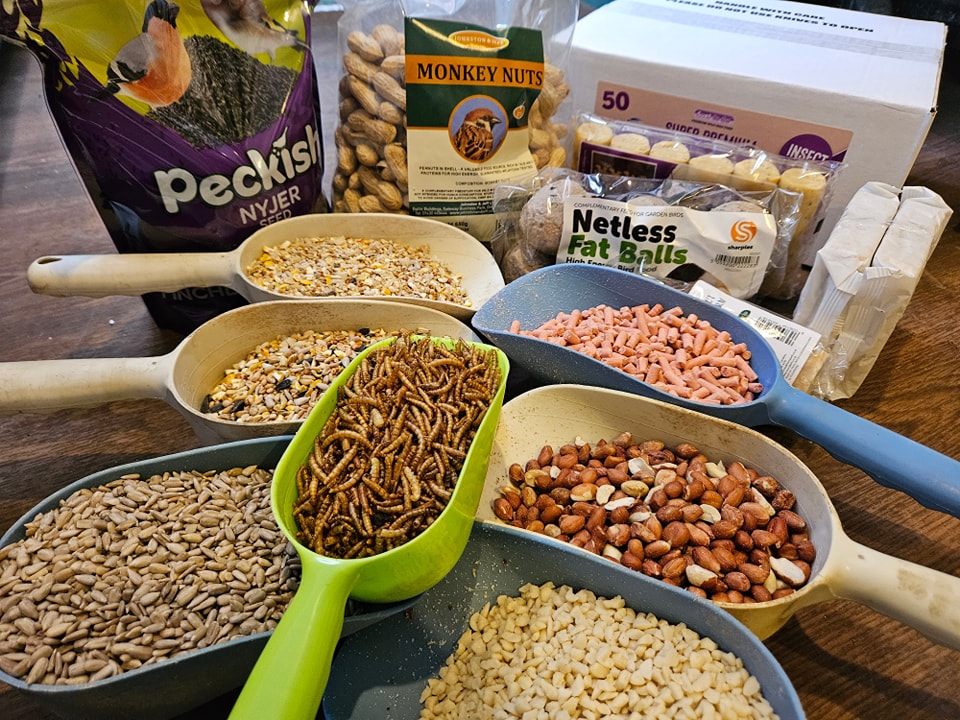
Suet is a pure fat substance which comes in many forms to provide an easy, high calorie food for winter insulation. Lulu’s Pet Pantry stocks suet in the form of fat balls, cakes and logs, all of which fit in different styles of feeders, or you can buy suet pellets to mix in with any other seed mixes.Peanuts are another high calorie substance which is packed with oils and proteins and appeals to many common garden birds such as jays and nuthatches. They don’t freeze and so are ideal for feeding during the colder months, either shelled or ground as granules.
Sunflower Black sunflower seeds are the most popular of the sunflower seeds as they have thinner shells and higher oil content than the normal variety, making them an easily accessible high energy food. However, the downside of this favourite of greenfinches and tits is the pile of husks left below the feeder, and so sunflower hearts offer birds direct access to the food without the mess.
Also known as thistle seed, nyjer is a calorific oily seed which helps birds store fat over the winter, and is particularly popular with finches and those with delicate bills due to its small size.
Not actual worms, mealworms are the larval stage of a beetle and are very popular for wild birds as they provide a good source of nutrients. Although many fruit feeding birds will migrate away over the winter, those that stay will enjoy a sweet treat every now and then, so offer some chopped apples, orange wedges, banana slices and halved grapes on a platform feeder.