
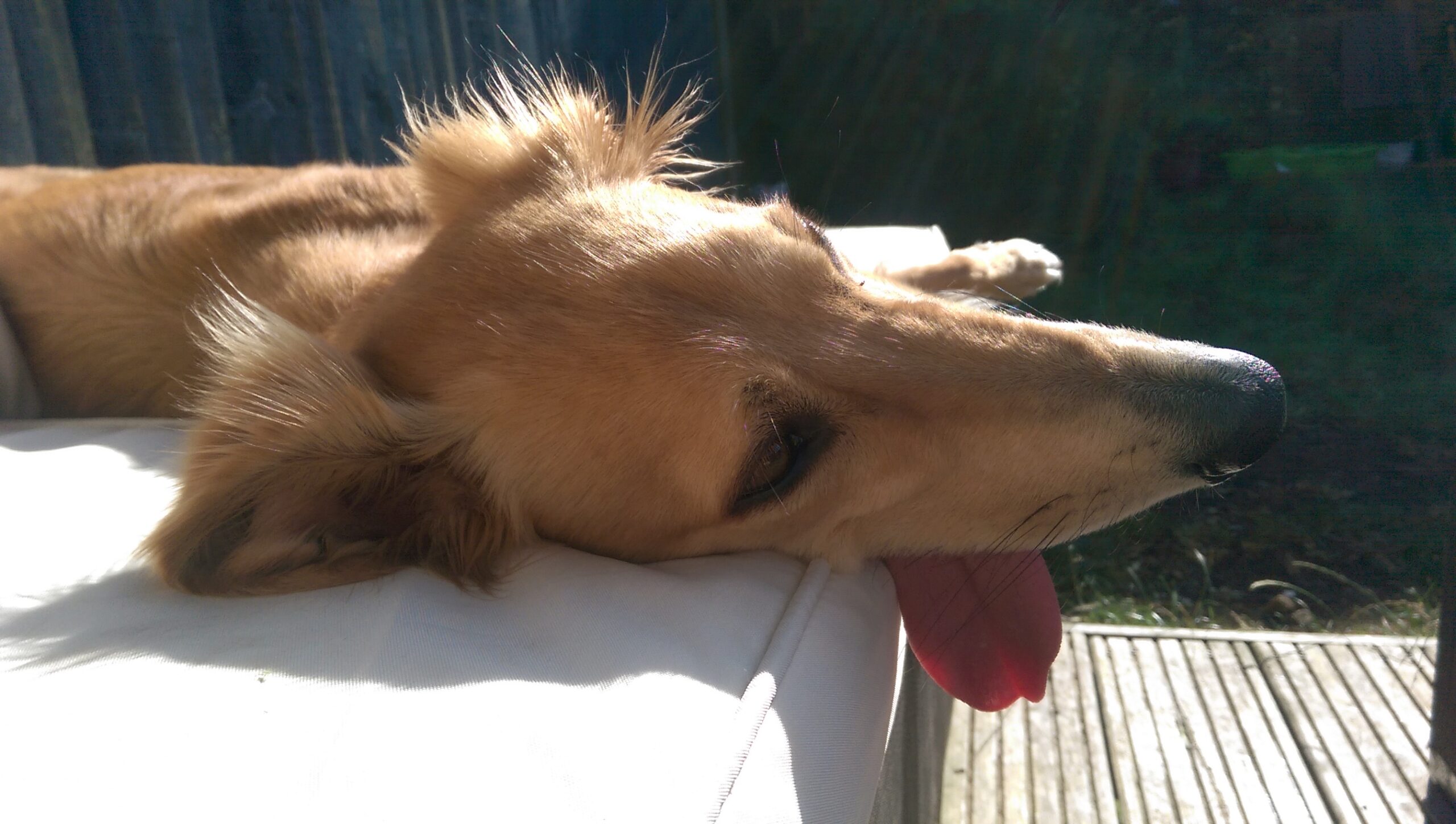
Unlike humans, our pets do not sweat to release body heat. The few sweat glands they have in their paws and around the nose don’t do a good enough job. Instead they will pant to cool themselves down, but it’s not the most effective system. Once a dog’s body temperature has risen, it can be hard for her to bring it back down, quickly leading to heat exhaustion.
There are many ways you can help prevent your dog getting into trouble:
- Always provide ample fresh water
- Give your dog frozen raw bones, a frozen filled Kong, frozen raw food, a doggy iced treat such as Billy & Margot, DAF, or Frozzys ice cream
- Do not walk your dog in the heat of the day, even when it’s overcast but humid
- Don’t let your dog run around in the garden instead of going for a walk, he will still heat up
- Be aware of exercising an unfit, unwell or older dog in the heat
- Restrict exercise of an otherwise healthy dog in the heat
- Use a cool coat or wet a neoprene harness to provide cooling relief to the body, in particular the chest area. Keep the coat or harness wet otherwise it will act as a second coat
- Provide a cool mat, wet towel or paddling pool filled with an inch of water for a dog to lay down on or in
- Always make sure your dog has access to a shady, well-ventilated area
- Draw the curtains to keep your house cool
- Keep your pet indoors if that is cooler than outside, but never lock them in a sun trap
- Don’t let your cat sit on a windowsill in the sun. Always draw the curtains and make sure they don’t sneak behind into a sun trap
- Cats don’t have a thirst drive, unlike dogs, so consider feeding wet or raw food to provide moisture, or add water to dry food
What are the symptoms?
If you are in tune with your dog’s normal behaviour, early signs of heat exhaustion include being less responsive to routine commands, lethargy, glazed eyes, excessive drooling, increased heart rate, disorientation or agitation. Excessive panting is the first obvious sign of overheating. Each dog is different in how quickly it can regulate its temperature, but thick coats, shortened airways, obesity and a lack of fitness will make it harder for some dogs. Likewise, puppies and older dogs will be more likely to struggle. If heavy panting doesn’t help, you need to take action quickly. The next symptoms can include the gums and tongue turning blue or purple, vomiting or diarrhoea, convulsions or collapsing. Urgent action is required at this stage.What to do
- When you first notice your dog start to overheat, move him out of the sun into a well-ventilated shady area.
- Always have fresh water available, but make sure your dog drinks rather than gulp furiously. Do not pour water direct into your dog’s mouth, let her drink naturally.
- Using cool / tepid water, offer a wet towel for your dog to lie on or place it on the chest, under his armpits, inside his back legs and on his neck. Do not pour water over his head or aim a hosepipe at your dog’s head.
- Do not use ice or very cold water as this could send an overheated dog into shock and restrict the blood vessels making the problem worse. (Please note that feeding ice cubes or frozen food to a healthy dog of a regular temperature will help keep them cool. The warning against ice only applies to dogs displaying signs of heat exhaustion).
- Get directly to a vet and make them aware you are coming in with a pet suffering from heat exhaustion so that they can be prepared.
Remember: Dogs don’t die from missing a walk, but they do die of heat exhaustion.